


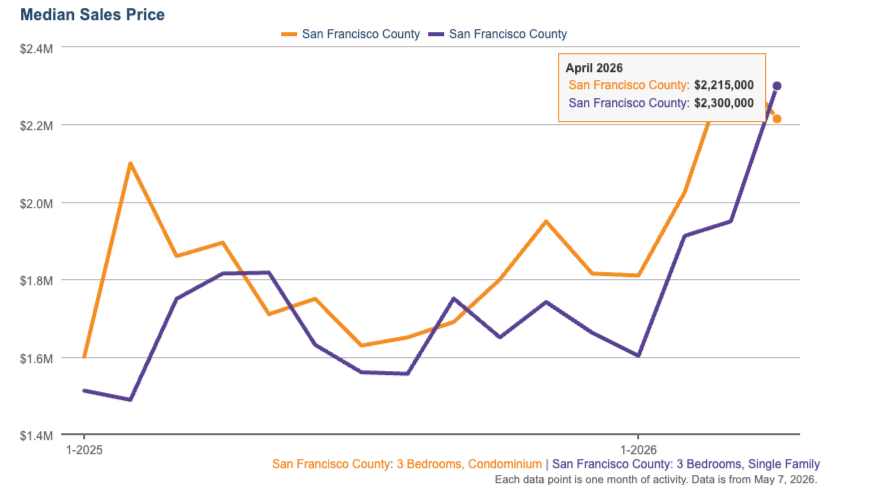
SF Condos vs Single-Family Homes: Where's the Better Play in 2026?
A $1M condo and a $2M house are both 'buying in SF.' But they're completely different bets. The returns are different, the risks are different, and the math changes depending on your timeline. Let's get into it."

10 Questions to Ask Before Buying a Condo
If you're in the market for a new place to call home, a condo may be just what you're looking for. Condos can offer many benefits, such as convenience and affordability. However, before you buy one, there are some things you need to ask, so you are aware of what you are getting into. In this blog post, we will discuss ten questions that you should ask before buying a condo. By answering these questions, you'll be able to make an informed decision about whether or not a condo is the right choice for you! Plus, don’t forget to get pre-approved when you start searching.

What Is a Broker's Tour — and Why Your Agent Should Be On One
The San Francisco Association of Realtors (SFAR) organizes broker's tour, a scheduled event where agents across brokerages walk active listings together, share market intel, and get eyes on off-market and coming-soon properties before they ever hit Zillow. I was on this week's tour — and here's exactly what we saw…

What Questions Should I Ask a Potential Real Estate Agent?
Before I became a licensed agent in San Francisco, I was an investor buying properties out of state. That meant trusting agents completely — and learning fast which questions actually mattered. Here's what I'd want every buyer to ask before signing anything.
Why is San Francisco Condo Market up almost 30% in One Year
San Francisco condo prices have jumped 27% year-over-year, driven largely by buyers who can no longer compete in the single-family home market. With limited inventory, rising tech-driven wealth, and intense competition in prime neighborhoods, demand has shifted sharply into larger condos and multi-unit properties. This post breaks down what’s behind the surge, where the market is moving fastest, and what it means for buyers and sellers right now.

Why Tenant-Occupied Properties Lag Behind in San Francisco’s Market
In San Francisco, tenant‑occupied homes and condos often sell for significantly less than their vacant, move‑in‑ready counterparts. From rent control caps and owner move‑in evictions to appraisal assumptions and buyer psychology, several forces compress the value of occupied properties. This post breaks down why tenant‑occupied SFHs and condos trade at a discount and how that affects your timing, strategy, and bottom line.

How’s the Condo Market in 2026? Here’s what you need to know.
While headlines point to rising inventory, price drops, and slow sales, that reality is heavily concentrated in downtown neighborhoods like SoMa, South Beach, and Mission Bay. Remove those areas from the equation, and a completely different story emerges: one where demand is strong, inventory is tight, and well-located condos are selling fast—often with multiple offers.

AI Is Transforming San Francisco Real Estate in 2026
Artificial intelligence is changing the San Francisco real estate market in real time. From AI company expansion to returning tech buyers, here’s what the shift means for homeowners, investors, and anyone watching the SF market.

New Water Conservation Requirements for Homeowners
San Francisco is set to implement stricter water conservation requirements starting May 15th 2026, creating new compliance challenges for residential sellers, buyers, and agents. With updated fixture standards and limited exemptions, property owners should review their homes early to avoid unexpected costs and delays.

Getting Your Homeowners Insurance Right: What You Need to Know
Don’t get homeowners insurance wrong — it will cost you. Insurance companies quote you based on what's cheap, not what actually covers rebuilding your home in a high-cost market. In the Bay Area, the gap between "cheap coverage" and "adequate coverage" can be hundreds of thousands of dollars. Here's what you need to know about getting properly insured—and some practical strategies to afford the coverage you actually need.